For many patients diagnosed with laryngeal (voice box) cancer, one of the greatest fears is not just the cancer itself, but the possibility of losing their voice. Questions such as “Will I be able to speak again?” or “How will I communicate with my family?” are among the most common concerns I hear during consultations.
The reassuring news is that advances in head and neck cancer surgery and rehabilitation have made it possible for many patients to regain functional communication after treatment. Depending on the type of surgery performed, several voice rehabilitation options are available that can help patients return to their personal, social, and professional lives.
In this article, I’ll explain how laryngeal cancer surgery affects the voice, the available methods of voice rehabilitation, and what patients can expect during recovery.
Understanding the Role of the Larynx
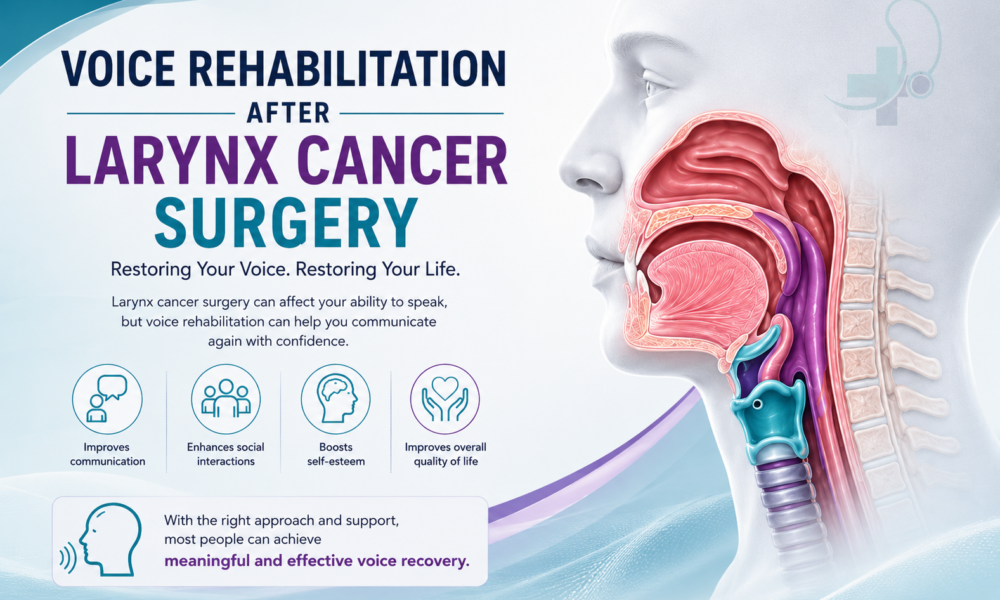
The larynx, commonly known as the voice box, is located in the front of the neck. It performs three essential functions:
- Produces sound for speech.
- Protects the airway during swallowing.
- Allows air to pass into the lungs for breathing.
Inside the larynx are the vocal cords, which vibrate as air passes through them, creating sound. Cancer involving these structures can affect speech even before treatment begins.
How Does Larynx Cancer Affect the Voice?
One of the earliest symptoms of laryngeal cancer is often persistent hoarseness or a change in voice lasting more than two weeks.
As the tumor grows, patients may also experience:
- Weak or breathy voice
- Difficulty speaking loudly
- Voice fatigue
- Persistent throat discomfort
- Difficulty swallowing
- Breathing problems in advanced cases
Treatment aims to remove the cancer while preserving as much normal voice and swallowing function as possible.
Types of Larynx Cancer Surgery
The effect on the voice depends largely on the type of surgery required.
Partial Laryngectomy
In a partial laryngectomy, only the cancerous portion of the larynx is removed while preserving part of the voice box.
Patients often retain natural speech, although the voice may become:
- Hoarser
- Softer
- Lower in volume
With speech therapy, many individuals achieve excellent functional communication.
Total Laryngectomy
When cancer is extensive, a total laryngectomy may be necessary.
This procedure removes the entire larynx and separates the airway from the mouth and nose. Breathing is then performed through a permanent opening in the neck called a stoma.
Because the vocal cords are removed, patients lose their natural voice. However, this does not mean they lose their ability to communicate.
Can You Speak After Total Laryngectomy?
Yes. Although natural voice production is no longer possible, modern rehabilitation techniques enable most patients to develop a new method of speaking.
The goal of rehabilitation is to restore effective communication and improve quality of life.
Voice Rehabilitation Options
The choice of rehabilitation depends on the patient’s overall health, surgical findings, lifestyle, and personal preferences.
1. Tracheoesophageal Voice Prosthesis (TEP)
The Tracheoesophageal Puncture (TEP) with a voice prosthesis is considered the gold standard for voice restoration after total laryngectomy.
How It Works
A small, one-way valve is placed between the trachea (windpipe) and the esophagus.
When the patient covers the stoma or uses a hands-free valve, air passes through the prosthesis into the esophagus, creating vibrations that produce speech.
Advantages
- Most natural-sounding voice
- Fluent speech
- Easier communication
- High patient satisfaction
- Rapid rehabilitation
The prosthesis requires regular maintenance and periodic replacement by a trained specialist.
2. Esophageal Speech
Esophageal speech is another option that does not require a prosthetic device.
Patients learn to swallow small amounts of air into the esophagus and release it in a controlled manner to create sound.
Benefits
- No device required
- No batteries
- No external equipment
Challenges
- Requires dedicated practice
- Takes longer to master
- Shorter phrases may be difficult
Although not every patient develops fluent esophageal speech, it remains an effective option for some individuals.
3. Electrolarynx
An electrolarynx is a handheld electronic device that produces vibrations.
When placed against the neck or cheek, these vibrations are shaped into speech by movements of the tongue and lips.
Advantages
- Easy to learn
- Immediate communication after healing
- Portable
- Useful backup method
Limitations
- Mechanical-sounding voice
- Requires battery-powered device
Many patients keep an electrolarynx even if they later transition to a voice prosthesis.
The Role of Speech and Language Therapy
Voice rehabilitation is much more than learning a new way to speak.
Speech-language pathologists play a central role in helping patients:
- Develop clear speech
- Improve breathing coordination
- Enhance swallowing function
- Build confidence
- Adapt to daily communication
Therapy begins before surgery whenever possible and continues throughout recovery.
Recovery After Larynx Cancer Surgery
Every patient’s recovery is unique.
During the first few weeks after surgery, the focus is on:
- Wound healing
- Nutrition
- Learning stoma care
- Preventing complications
Once healing progresses, voice rehabilitation begins.
Many patients notice steady improvement over several months with regular practice and support.
Emotional Recovery Is Equally Important
Loss of the natural voice can affect more than communication, it can influence confidence, relationships, work, and emotional well-being.
Patients may experience:
- Anxiety
- Frustration
- Social withdrawal
- Depression
Open communication with family, healthcare providers, and support groups can make a significant difference during this transition.
Rehabilitation addresses not only speech but also the emotional aspects of recovery.
Life After Voice Rehabilitation
With appropriate rehabilitation, many patients successfully return to:
- Professional careers
- Family conversations
- Public speaking
- Social activities
- Travel
- Hobbies
Modern voice restoration techniques have enabled thousands of laryngectomy patients to lead active, fulfilling lives.
The journey requires patience, practice, and support, but meaningful communication is achievable.
Tips for Patients Undergoing Voice Rehabilitation
- Attend all speech therapy sessions.
- Practice voice exercises daily.
- Learn proper stoma care.
- Stay hydrated.
- Maintain regular follow-up visits.
- Report any difficulty with swallowing or the voice prosthesis promptly.
- Seek emotional support when needed.
- Be patient, progress improves with consistent effort.
Frequently Asked Questions
Will my voice sound exactly the same after surgery?
No. The quality of speech depends on the type of surgery and rehabilitation method. However, many patients develop clear and understandable speech that allows them to communicate effectively.
Which rehabilitation method is best?
For many patients undergoing total laryngectomy, a tracheoesophageal voice prosthesis (TEP) provides the most natural and fluent speech. The best option is determined after evaluating your medical condition, lifestyle, and individual needs.
How long does rehabilitation take?
Some patients begin communicating with an electrolarynx within weeks, while mastering a voice prosthesis or esophageal speech may take several weeks to months. Consistent speech therapy significantly improves outcomes.
Final Thoughts
Losing your natural voice after laryngeal cancer surgery can feel overwhelming, but it does not mean losing your ability to communicate. Thanks to advances in surgical techniques, voice prostheses, speech therapy, and rehabilitation, most patients can regain functional speech and return to an active, independent life.
As a Head & Neck Cancer Surgeon, I believe that successful treatment extends beyond removing the cancer. Preserving dignity, restoring communication, and helping patients regain confidence are equally important parts of the recovery journey.
If you or a loved one is preparing for larynx cancer surgery, discuss voice rehabilitation options with your surgical team before treatment. Understanding what to expect can make the journey smoother and empower you to participate actively in your recovery.
About the Author
Dr. Dushyant Mandlik is a Head & Neck Cancer specialist in ahmedabad with expertise in laryngeal cancer surgery, oral cancer, thyroid cancer, salivary gland tumors, and microvascular reconstruction. He is dedicated to organ preservation whenever possible and to comprehensive rehabilitation following cancer treatment. Working closely with speech-language pathologists and multidisciplinary cancer teams, Dr. Mandlik helps patients regain communication, swallowing function, and quality of life after head and neck cancer surgery.