When a patient is diagnosed with head and neck cancer, the immediate focus is understandably on treatment—surgery, radiation therapy, chemotherapy, immunotherapy, or a combination of these approaches.
But cancer treatment is only one part of the journey.
Once treatment is completed, patients and families often expect life to return to normal immediately. In reality, emotional recovery can take much longer than physical healing.
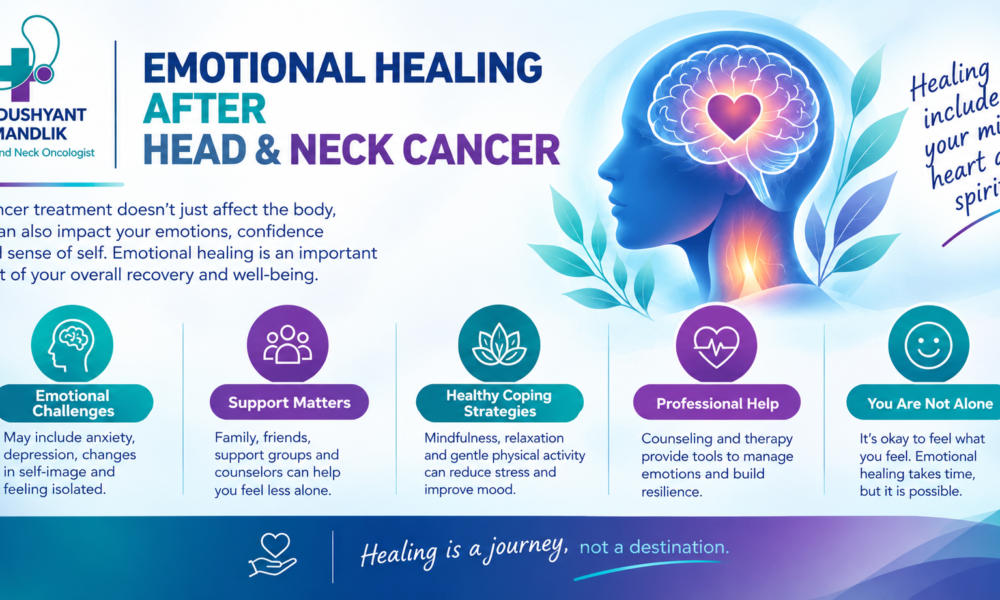
Head and neck cancer can affect areas closely connected to identity, communication, eating, appearance, and social interaction. Changes in the face, voice, swallowing, taste, or ability to communicate can sometimes affect a person’s confidence and emotional wellbeing.
As a head and neck cancer surgeon with more than 20 years of experience, I have seen that recovery is not complete simply because the cancer treatment has finished. Emotional healing deserves the same attention and patience as physical rehabilitation.
Why Can Head & Neck Cancer Have a Strong Emotional Impact?
The head and neck contain many structures that influence how we communicate and interact with the world around us.
Treatment may affect:
- Speech and voice
- Swallowing and eating
- Facial appearance
- Taste and smell
- Breathing
- Jaw movement
- Neck and shoulder function
- Social interaction
For some patients, these changes are temporary. For others, they may persist for months or require long-term rehabilitation.
This can lead to feelings such as anxiety, sadness, frustration, embarrassment, anger, or loss of confidence.
These reactions are understandable. They do not mean that a patient is weak or unable to cope.
The Emotional Journey Can Change Over Time
There is no single emotional response to cancer.
Some patients feel overwhelmed immediately after diagnosis. Others remain focused and emotionally strong throughout treatment and experience difficulties only after treatment has ended.
During active treatment, there may be a clear goal: complete surgery, finish radiation, recover from treatment.
After treatment, that structure can disappear.
Patients may suddenly have more time to think about what happened and what the future might hold.
This period can sometimes bring anxiety about recurrence, uncertainty about long-term health, or concern about returning to work and social life.
Understanding that these emotions can occur is an important first step toward managing them.
Fear of Cancer Recurrence
One of the most common concerns after treatment is:
“What if the cancer comes back?”
This fear can remain even when there is no evidence of disease.
A routine follow-up appointment may cause anxiety. A minor throat irritation, mouth ulcer, cough, or other symptom may immediately make a patient worry about recurrence.
It is important to distinguish between awareness and constant fear.
Regular follow-up is essential because it allows the medical team to monitor recovery and identify concerning changes. But patients should also avoid interpreting every physical sensation as evidence that cancer has returned.
If a new symptom persists or causes concern, discuss it with your treating team rather than silently carrying the worry.
Changes in Appearance and Self-Confidence
Some head and neck cancer surgeries can alter facial contour, scars, the jaw, or other visible areas.
Even when surgery has been successful from an oncological perspective, a patient may struggle emotionally with changes in appearance.
Looking in the mirror may feel different.
Patients may worry about how others perceive them or feel uncomfortable meeting friends, returning to work, or attending social events.
This is where reconstructive surgery and rehabilitation can play an important role. When reconstruction is appropriate, the aim is not only to restore anatomy but also to support function and appearance.
However, emotional adjustment may still take time.
Patients should give themselves permission to adapt gradually rather than expecting immediate acceptance of every change.
Speech and Communication Can Affect Confidence
A change in voice or speech can be particularly difficult.
Communication is fundamental to personal and professional relationships. After treatment, some patients may feel self-conscious about speaking in public or talking with people they do not know.
Voice and speech rehabilitation can be extremely valuable.
Depending on the treatment received, rehabilitation may involve a speech and language therapist, voice exercises, swallowing therapy, or other specialized interventions.
Improvement may happen gradually.
The goal is not simply to restore speech mechanically but to help the patient regain confidence in everyday communication.
Eating and Social Life
Food is closely connected with family, culture, celebration, and social interaction.
Difficulty chewing or swallowing can therefore have an emotional impact beyond nutrition.
Patients may avoid restaurants, family meals, or social occasions because eating has become difficult or uncomfortable.
A structured rehabilitation programme can help patients gradually improve swallowing and dietary function.
Nutritional support is also important, particularly when treatment has caused weight loss or prolonged difficulty eating.
Family members can help by creating a relaxed environment around meals rather than putting pressure on the patient to eat more quickly or consume foods they are not yet comfortable with.
Returning to Work and Everyday Life
Returning to normal activities can be an important milestone.
However, recovery does not always follow a straight line.
A patient may feel physically better but still lack confidence. Another patient may be emotionally ready to return to work but still have speech, swallowing, or fatigue-related difficulties.
The timing of returning to work should therefore be individualized.
Some patients benefit from a gradual return, flexible working hours, or temporary adjustments to their responsibilities.
There is no universal timeline for emotional recovery.
The Importance of Support From Family
Family support can make a meaningful difference during recovery.
Sometimes the most helpful thing a family member can do is simply listen.
Instead of repeatedly asking, “Are you okay?”, consider asking:
“What would make today easier for you?”
Practical support can include:
- Accompanying the patient to appointments
- Helping with transportation
- Supporting dietary needs
- Encouraging rehabilitation exercises
- Spending time together
- Allowing the patient to maintain independence where possible
At the same time, family members should avoid treating the patient as helpless.
Cancer treatment may change certain abilities temporarily, but it does not take away a person’s independence or identity.
Rebuilding Confidence Takes Time
Emotional healing is rarely a single moment.
It often happens through small milestones:
Eating a meal comfortably.
Speaking confidently with family.
Returning to work.
Meeting friends again.
Going outside without worrying about appearance.
Participating in an activity that was previously avoided.
Each of these moments can help rebuild confidence.
Patients should recognize these improvements rather than focusing only on what has changed since before cancer.
When Professional Emotional Support Can Help
There is no need to wait until emotional distress becomes severe before seeking help.
A psycho-oncologist, psychologist, counsellor, or psychiatrist can help patients manage:
- Persistent anxiety
- Depression
- Fear of recurrence
- Sleep problems
- Social withdrawal
- Body-image concerns
- Relationship difficulties
- Difficulty adjusting to life after treatment
Support groups can also be helpful because they allow patients to interact with people who have experienced similar challenges.
Asking for psychological support is not a sign of failure. It is another form of rehabilitation.
Choosing the Right Supportive Care Team
Emotional recovery works best when it is integrated into overall cancer care.
For patients looking for comprehensive support, an experienced head and neck cancer surgeon in Ahmedabad can help coordinate treatment with appropriate rehabilitation and supportive-care professionals.
Depending on the patient’s needs, this may involve surgeons, oncologists, speech and swallowing therapists, nutritionists, physiotherapists, dental specialists, psychologists, and other members of the multidisciplinary team.
Finding a New Sense of Normal
After cancer, patients sometimes say:
“I want my old life back.”
That feeling is completely understandable.
But recovery does not always mean returning to exactly the same life that existed before cancer.
Sometimes it means creating a new normal.
It may involve adapting to a different voice, a different way of eating, a scar, or a new routine.
The aim is not to forget the cancer experience. It is to ensure that cancer does not become the only thing that defines the person’s life.
Small Steps Matter
Emotional healing does not require patients to feel positive every day.
Some days may be difficult.
Some days may bring frustration or fear.
That is part of the recovery process.
Rather than expecting immediate emotional recovery, focus on achievable steps:
- Follow your rehabilitation plan
- Maintain regular medical follow-up
- Stay connected with supportive people
- Gradually resume meaningful activities
- Ask for help when needed
- Celebrate functional improvements
- Discuss persistent emotional difficulties with a professional
Progress may be slow, but slow progress is still progress.
Life After Head & Neck Cancer
Completing cancer treatment is a major achievement, but it is also the beginning of another phase of recovery.
The medical team continues to monitor for recurrence and manage treatment-related effects. At the same time, patients begin rebuilding their routines, relationships, confidence, and independence.
For some, this process may take weeks.
For others, it may take months or longer.
There is no single definition of successful emotional recovery.
For one patient, it may mean speaking confidently again. For another, it may mean eating with family, returning to work, or simply feeling comfortable in social situations.
What matters is helping each patient reach the best quality of life possible.
Final Thoughts From Dr. Dushyant Mandlik
As surgeons, our responsibility does not end when the cancer has been removed.
We must also think about how the patient will live after treatment.
Head and neck cancer can affect much more than physical health. It can influence communication, appearance, eating, relationships, confidence, and emotional wellbeing.
That is why rehabilitation and emotional support should be considered an important part of comprehensive cancer care.
If you or someone you love is recovering from head and neck cancer, remember that emotional healing takes time. There is no requirement to “move on” immediately after treatment.
Talk to your healthcare team about difficulties rather than facing them alone.
With appropriate medical care, rehabilitation, emotional support, and the support of family and friends, patients can gradually regain confidence and return to meaningful daily life.
Cancer may become a chapter in your story – but it does not have to define the rest of it.