One of the most difficult questions patients and families face after cancer treatment is: “Why did the cancer come back?”
After completing surgery, radiation therapy, chemotherapy, or a combination of treatments, patients naturally hope that the cancer is gone permanently. When cancer is later detected again, it can be frightening and confusing.
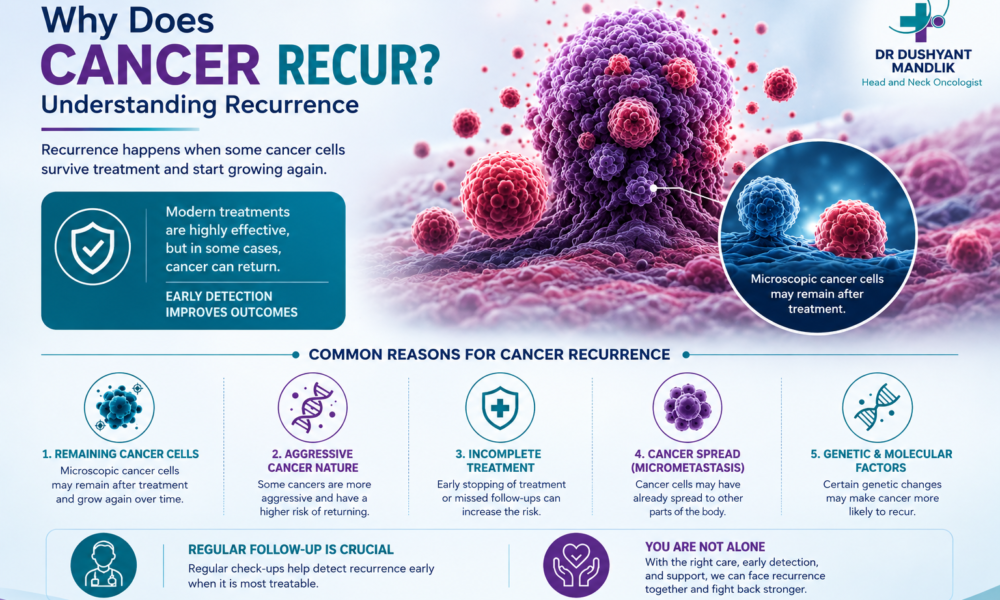
Cancer recurrence does not necessarily mean that the original treatment was unsuccessful. Even when treatment appears completely successful, microscopic cancer cells can sometimes remain undetectable and later grow.
Understanding why cancer recurs, where it can recur, and how recurrence is evaluated can help patients approach follow-up care with greater awareness and confidence.
What Does Cancer Recurrence Mean?
Cancer recurrence means that cancer has returned after a period when it could no longer be detected.
A recurrence is different from a completely new cancer. However, patients who have had head and neck cancer can also develop a second primary cancer, particularly when risk factors such as tobacco or alcohol exposure continue.
Recurrence can occur at or near the original tumor site, in nearby lymph nodes, or at distant organs.
Why Can Cancer Come Back?
The most important reason is that cancer treatment cannot always detect or eliminate every microscopic cancer cell.
A tumor that can be seen on imaging or during surgery may be only part of the disease. Individual cancer cells can sometimes extend beyond the visible tumor.
Even after apparently complete removal, a very small number of cells may remain. These cells may be too few to appear on scans or cause symptoms. Over time, they can multiply and become detectable.
This is one reason why regular follow-up after cancer treatment is essential.
Common Reasons for Cancer Recurrence
Several biological and clinical factors can influence the risk of recurrence.
1. Tumor Biology
Not all cancers behave in the same way.
Some tumors grow slowly and remain localized, while others are biologically more aggressive and have a greater tendency to invade surrounding tissues or spread elsewhere.
The microscopic characteristics of the tumor, including its grade, subtype and other pathological features, can therefore provide important information about recurrence risk.
2. Stage of the Cancer
The stage at diagnosis is an important factor.
A cancer that is small and localized generally has a lower risk of recurrence than a cancer that has already invaded surrounding structures or spread to lymph nodes.
However, stage alone does not determine an individual’s outcome. Tumor biology and response to treatment also matter.
3. Lymph Node Involvement
Head and neck cancers can spread to lymph nodes in the neck.
The number of affected lymph nodes, their size and the presence of certain pathological features can influence the risk of recurrence.
For example, extranodal extension, where cancer extends through the lymph-node capsule into surrounding tissue, is an important adverse pathological feature in several head and neck cancers.
4. Surgical Margins
During cancer surgery, the tumor is removed along with a surrounding margin of tissue.
Pathologists examine these margins to determine whether cancer cells are present at the edge of the removed specimen.
A close or involved margin may increase the risk of local recurrence and may influence the need for additional treatment.
5. Treatment Response
Cancer does not respond identically in every patient.
Some tumors respond very well to radiation or systemic therapy, while others may contain cells that are more resistant to treatment.
This difference in treatment sensitivity can influence the possibility of recurrence.
6. Continued Risk Factors
For some head and neck cancers, continued exposure to tobacco, alcohol, or other carcinogenic substances can increase the risk of recurrence or development of a second primary cancer.
Stopping tobacco and avoiding excessive alcohol are therefore important parts of long-term cancer care.
Where Can Head & Neck Cancer Recur?
Recurrence can generally occur in three ways.
Local Recurrence
The cancer returns at or close to the original site.
For example, after treatment for an oral cancer, recurrence may occur in the oral cavity or nearby tissues.
Regional Recurrence
The cancer returns in the regional lymph nodes of the neck.
This is why examination of the neck remains an important part of follow-up.
Distant Recurrence
Cancer cells can sometimes travel through the bloodstream or lymphatic system and establish disease in distant organs.
Depending on the type of head and neck cancer, the lungs, bones, liver or other organs may be affected.
What Symptoms Should Patients Watch For?
Not every symptom means that cancer has returned. Many symptoms after treatment can have non-cancerous causes.
However, persistent or unexplained changes should be evaluated.
Important warning signs can include:
- A new lump in the neck
- Persistent mouth or throat ulcer
- New or worsening difficulty swallowing
- Persistent hoarseness or voice change
- Unexplained bleeding
- Increasing pain that does not settle
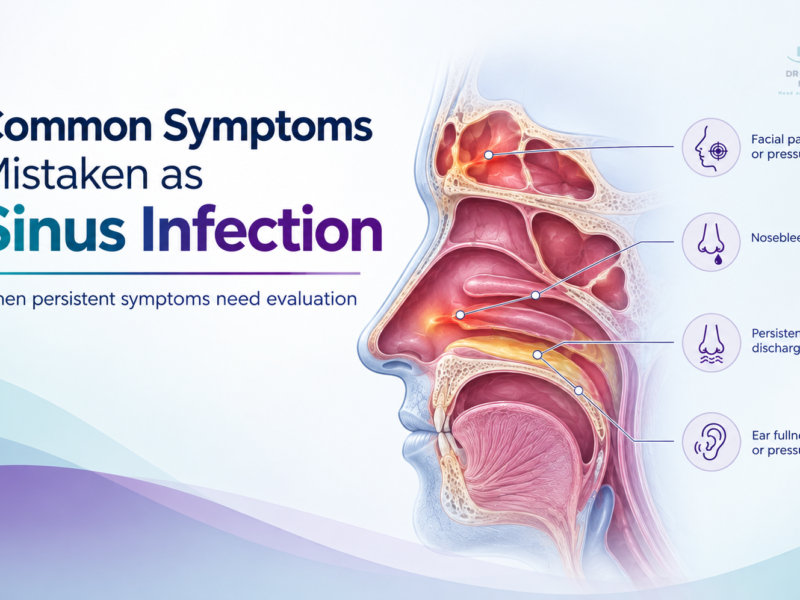
- Persistent nasal obstruction or nosebleeds
- Unexplained weight loss
- A new swelling or change near the previous surgical site
Patients should not wait for symptoms if a scheduled follow-up examination is due.
How Is Recurrence Diagnosed?
When recurrence is suspected, evaluation may include a clinical examination and endoscopic assessment.
Depending on the situation, the doctor may recommend:
- CT scan
- MRI
- PET-CT
- Ultrasound of the neck
- Fine-needle aspiration or other biopsy
- Additional laboratory or molecular testing when appropriate
Imaging findings alone do not always establish recurrence. In many situations, tissue confirmation through biopsy is important before deciding on further treatment.
Can Recurrence Be Prevented?
There is no guaranteed way to prevent cancer recurrence.
However, several measures can help reduce risk and improve long-term health.
Stop Tobacco
Complete tobacco cessation is one of the most important steps for patients treated for head and neck cancer.
This includes smoking as well as smokeless tobacco products.
Limit or Avoid Alcohol
Alcohol can contribute to the development of several head and neck cancers, particularly when combined with tobacco exposure.
Maintain Good Nutrition
Adequate nutrition supports recovery, immune function and overall health.
Some patients may need help from a dietitian, particularly when swallowing difficulties persist after treatment.
Attend Regular Follow-Up
Follow-up examinations are not simply routine appointments. They provide an opportunity to identify recurrence at an earlier stage and manage treatment-related problems.
Pay Attention to New Symptoms
Patients know their own bodies better than anyone. A new or persistent change should be discussed with the treating team rather than ignored.
What Happens If Cancer Recurs?
The treatment of recurrent cancer depends on several factors, including:
- Location of recurrence
- Size and extent of disease
- Previous treatment
- Time since the original treatment
- Overall health
- Tumor biology
- Whether distant spread is present
Treatment may include surgery, radiation therapy, chemotherapy, immunotherapy, targeted therapy, or a combination of these approaches.
For selected patients with localized recurrence, surgery may offer an opportunity for long-term disease control.
In other situations, systemic treatment or radiation may be more appropriate.
Importantly, recurrence does not automatically mean that treatment is no longer possible. Every case needs individual assessment.
Why Specialist Evaluation Matters
Recurrent head and neck cancer can be technically and biologically different from the original disease.
Previous surgery and radiation may have changed the anatomy and tissue quality, making further treatment more complex.
For this reason, treatment planning should ideally involve a multidisciplinary team with experience in recurrent head and neck cancer.
For patients considering evaluation or treatment, consulting an experienced head and neck cancer surgeon in Ahmedabad can help determine the appropriate approach based on the location and extent of recurrence.
Does Recurrence Mean the Cancer Is Untreatable?
Not necessarily.
The word “recurrence” can understandably create fear, but it does not automatically mean that treatment options have ended.
Some recurrent cancers can be treated successfully with surgery or other therapies, particularly when the recurrence is detected while it remains localized.
When recurrence is more extensive or has spread to distant organs, treatment may focus on controlling the disease, extending survival, relieving symptoms and maintaining quality of life.
The treatment goal must therefore be determined individually.
The Emotional Impact of Recurrence
Cancer recurrence is not only a medical problem.
Patients may experience anxiety, anger, sadness, uncertainty or fear about the future. Even a minor symptom can sometimes create significant worry in someone who has previously undergone cancer treatment.
These feelings are understandable.
Good cancer care should address the emotional and psychological aspects of recurrence as well as the physical disease. Patients should feel comfortable discussing their concerns with their healthcare team.
Follow-Up Is Part of Cancer Treatment
Treatment does not truly end on the day surgery or radiation is completed.
Follow-up is an important continuation of cancer care.
During follow-up, we assess:
- Whether there is evidence of recurrence
- Healing after treatment
- Swallowing and speech
- Nutrition
- Dental and oral health
- Neck and shoulder function
- Long-term effects of radiation or surgery
- Overall quality of life
The frequency and duration of follow-up depend on the type and stage of cancer and the treatment received.
Final Thoughts
Cancer recurrence is a complex process influenced by tumor biology, stage, pathological features, treatment response and other individual factors.
A recurrence is not necessarily the result of something the patient did wrong, nor does it automatically mean that the original treatment failed.
The most important message I would give to patients is not to lose hope and not to ignore new or persistent symptoms.
Regular follow-up, awareness of warning signs, healthy lifestyle changes and timely specialist evaluation can make an important difference.
Our goal after cancer treatment is not simply to say that the tumor has been removed. It is to monitor the patient carefully, identify problems early, treat recurrence when possible, and support the best possible quality of life over the long term.
Cancer care continues beyond treatment and so does our commitment to the patient.