Sinus cancer is one of the rarest forms of head and neck cancer, accounting for less than 5% of all cancers in this region. Because its early symptoms often resemble common conditions such as sinus infections or allergies, many patients are diagnosed only after the disease has progressed.
Fortunately, advances in cancer surgery, radiation therapy, chemotherapy, and targeted treatments have significantly improved outcomes. The key to successful treatment is choosing the right approach based on the type, stage, and location of the cancer.
As a Head & Neck Cancer Surgeon with over 20 years of experience, my priority is to remove the cancer completely while preserving vital functions and maintaining the patient’s quality of life. In this article, I explain the surgical and non-surgical sinus cancer treatment options and what patients can expect throughout their treatment journey.
What is Sinus Cancer?
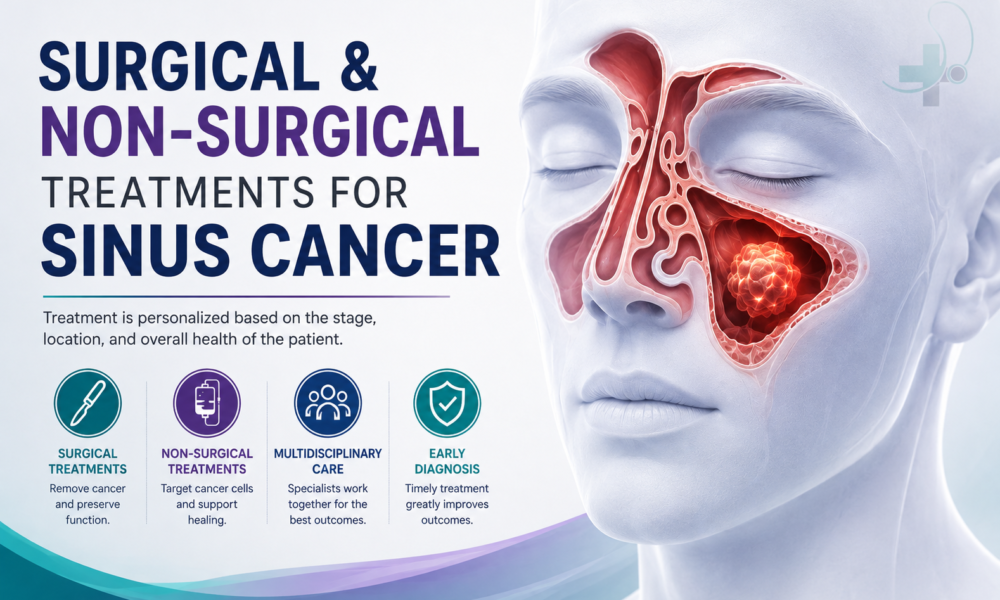
Sinus cancer develops in the paranasal sinuses, which are air-filled spaces located around the nose. These include:
- Maxillary sinuses
- Ethmoid sinuses
- Frontal sinuses
- Sphenoid sinuses
The maxillary sinus is the most commonly affected site.
Sinus cancers can arise from different tissues, including:
- Squamous cell carcinoma (most common)
- Adenocarcinoma
- Adenoid cystic carcinoma
- Melanoma
- Sinonasal undifferentiated carcinoma (SNUC)
- Sarcomas
Each type behaves differently and requires individualized treatment.
When is Treatment Needed?
Treatment begins immediately after confirming the diagnosis through:
- Clinical examination
- Nasal endoscopy
- CT scan
- MRI scan
- PET-CT (when indicated)
- Biopsy
The treatment plan depends on:
- Cancer stage
- Tumor size
- Type of cancer
- Involvement of nearby structures
- Patient’s overall health
- Previous treatments
Most patients benefit from a multidisciplinary tumor board approach involving surgeons, radiation oncologists, medical oncologists, radiologists, pathologists, and rehabilitation specialists.
Goals of Sinus Cancer Treatment
The primary goals include:
- Complete removal or destruction of cancer
- Prevent recurrence
- Preserve vision and brain function whenever possible
- Maintain facial appearance
- Restore breathing, speech, and swallowing
- Improve long-term quality of life
Surgical Treatment for Sinus Cancer
Surgery remains the cornerstone of treatment for many patients with localized sinus cancer.
The objective is to remove the tumor completely with a margin of healthy tissue while preserving important structures whenever it is safe to do so.
Endoscopic Sinus Cancer Surgery
Advances in endoscopic techniques now allow many tumors to be removed through the nostrils without external incisions.
Advantages
- No facial scars
- Less blood loss
- Reduced postoperative pain
- Faster recovery
- Shorter hospital stay
- Better visualization using high-definition cameras
Endoscopic surgery is suitable for selected early-stage tumors and some advanced tumors managed in experienced centers.
Open Craniofacial Surgery
Larger or more aggressive tumors may require open surgery.
This approach may involve:
- Facial incisions
- Removal of affected bone
- Reconstruction
- Collaboration with neurosurgeons if the tumor involves the skull base
Open surgery provides better access for tumors extending into:
- Orbit
- Skull base
- Facial bones
- Soft tissues
Maxillectomy
If cancer involves the upper jaw (maxilla), part or all of the maxillary bone may need removal.
Types include:
- Partial maxillectomy
- Total maxillectomy
- Extended maxillectomy
Modern reconstructive surgery helps restore facial symmetry and oral function.
Skull Base Surgery
When tumors extend towards the base of the skull, specialized skull base surgery may be required.
These surgeries are performed by experienced multidisciplinary teams using advanced imaging and navigation systems.
Reconstructive Surgery After Tumor Removal
Cancer surgery may leave defects affecting:
- Nose
- Face
- Upper jaw
- Eye socket
- Palate
Reconstruction aims to restore:
- Appearance
- Speech
- Swallowing
- Chewing
- Breathing
Techniques include:
- Local flaps
- Regional flaps
- Microvascular free flap reconstruction
- Bone reconstruction using fibula free flap
- Prosthetic rehabilitation when appropriate
Modern reconstruction significantly improves quality of life after surgery.
Non-Surgical Treatments for Sinus Cancer
Not every patient requires surgery alone. Many benefit from additional therapies.
Radiation Therapy
Radiation therapy uses high-energy beams to destroy cancer cells.
It may be recommended:
- After surgery
- Instead of surgery for selected patients
- For unresectable cancers
- To reduce recurrence risk
Modern techniques include:
IMRT (Intensity-Modulated Radiation Therapy)
IMRT precisely targets tumors while reducing radiation exposure to nearby healthy tissues such as:
- Eyes
- Brain
- Salivary glands
- Spinal cord
This reduces treatment-related side effects.
Chemotherapy
Chemotherapy uses medicines to destroy cancer cells throughout the body.
It may be used:
- Before surgery (neoadjuvant chemotherapy)
- Along with radiation therapy
- After surgery in selected patients
- For advanced or metastatic disease
Common drugs include platinum-based chemotherapy, often combined with other agents depending on the tumor type.
Chemoradiation
Some patients receive chemotherapy and radiation simultaneously.
This combined treatment increases the effectiveness of radiation and is commonly used for:
- Advanced cancers
- Organ preservation
- Patients unsuitable for surgery
Targeted Therapy
Certain tumors respond to medications that specifically target cancer cells.
Targeted therapy may be considered in:
- Recurrent cancers
- Advanced disease
- Specific molecular subtypes
Testing helps determine whether these treatments are appropriate.
Immunotherapy
Immunotherapy strengthens the body’s immune system to recognize and attack cancer cells.
It may be considered for:
- Recurrent sinus cancers
- Metastatic disease
- Patients who no longer respond to standard treatments
Research in this area continues to expand, offering new hope for selected patients.
Which Treatment is Best?
There is no single treatment suitable for every patient.
The best approach depends on:
- Cancer stage
- Histological type
- Tumor location
- Eye involvement
- Brain involvement
- Patient age
- General health
- Functional considerations
Many patients receive a combination of:
- Surgery
- Radiation therapy
- Chemotherapy
This multimodal approach often provides the best chance of cure while preserving function.
Recovery After Treatment
Recovery varies depending on the treatment received.
Patients may require:
- Nasal care
- Speech therapy
- Swallowing rehabilitation
- Nutritional support
- Dental rehabilitation
- Regular follow-up imaging
Most patients gradually return to normal activities over several weeks to months.
Possible Side Effects
Treatment may cause temporary or long-term side effects, including:
- Nasal blockage
- Dry mouth
- Altered taste
- Fatigue
- Facial swelling
- Difficulty chewing
- Vision-related issues (in advanced cases)
- Changes in speech or swallowing
Early rehabilitation and supportive care help minimize these effects.
Importance of Regular Follow-Up
Even after successful treatment, follow-up is essential to:
- Detect recurrence early
- Monitor healing
- Manage treatment-related side effects
- Evaluate functional recovery
- Provide long-term cancer surveillance
Most patients require regular visits during the first five years after treatment.
Can Sinus Cancer Be Cured?
Yes. Many patients with early-stage sinus cancer can be cured, especially when diagnosed promptly and treated by an experienced multidisciplinary team.
Even in advanced cases, modern surgical techniques, precision radiation therapy, systemic treatments, and reconstructive surgery have significantly improved outcomes and quality of life.
Final Thoughts from Dr. Dushyant Mandlik
Sinus cancer is uncommon, but it demands specialized care due to its proximity to critical structures such as the eyes, brain, and facial bones. Successful treatment requires careful planning, advanced surgical expertise, and a multidisciplinary approach tailored to each patient’s needs.
Today’s treatment options extend beyond simply removing the cancer, they focus on preserving function, restoring appearance, and helping patients return to their daily lives with confidence. Early diagnosis remains one of the most important factors in achieving the best possible outcome.
If you experience persistent nasal blockage, recurrent nosebleeds, facial swelling, or unexplained sinus symptoms that do not improve with routine treatment, seek evaluation from a head and neck cancer specialist. Early intervention can make a significant difference.
For patients seeking specialized care, consulting an experienced head and neck cancer surgeon in Ahmedabad can help ensure that sinus cancer treatment is carefully planned according to the tumor’s location, stage, and individual needs.
Frequently Asked Questions (FAQs)
1. Is surgery always required for sinus cancer?
No. While surgery is the primary treatment for many localized tumors, some patients may be treated with radiation therapy, chemotherapy, or a combination of treatments depending on the cancer type and stage.
2. Can sinus cancer be treated without removing the eye?
In many cases, yes. Modern surgical techniques aim to preserve the eye whenever it is safe and oncologically appropriate.
3. How long does recovery take after sinus cancer surgery?
Recovery varies based on the extent of surgery and additional treatments but generally ranges from a few weeks to several months, with rehabilitation playing an important role.
4. Will I need reconstruction after surgery?
Not every patient requires reconstruction. However, larger tumors involving the jaw, palate, or facial structures may require reconstructive procedures to restore function and appearance.
5. Can sinus cancer come back after treatment?
Yes. Regular follow-up appointments and imaging are important to detect recurrence early and manage any long-term treatment effects.