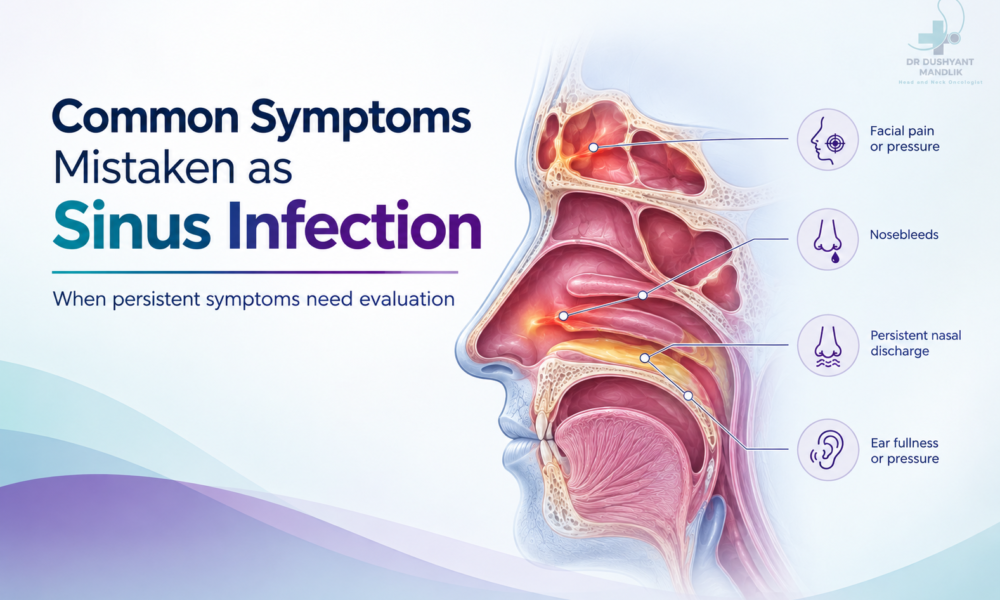
A blocked nose, facial pressure, headache, or nasal discharge is often associated with a sinus infection. In many cases, these symptoms are caused by sinusitis, allergies, or other non-cancerous conditions. However, persistent or unusual sinus symptoms should not always be assumed to be an infection.
Some cancers of the nasal cavity and paranasal sinuses can produce symptoms that resemble common sinus problems. Because these cancers are relatively uncommon and may develop in areas that are difficult to examine, diagnosis can sometimes be delayed.
As a head and neck cancer surgeon with over 20 years of experience, I believe that patient awareness is an important part of early detection. Recognizing when symptoms need further evaluation does not mean assuming the worst. It means understanding when a routine sinus complaint deserves a closer look.
In this article, I explain the common symptoms that may be mistaken for a sinus infection, the warning signs that require medical attention, and how sinus and nasal cancers are evaluated.
What Is the Difference Between Sinusitis and Sinus Cancer?
Before discussing warning signs, it is important to understand that sinusitis and sinus cancer are different conditions.
Sinusitis is an inflammation or infection of the sinus lining. It may be caused by viruses, bacteria, allergies, or other factors affecting sinus drainage.
Sinus cancer, also called sinonasal cancer, develops in the cells of the nasal cavity or paranasal sinuses. These cancers are rare, and their symptoms can overlap with more common nasal and sinus conditions.
Having sinus symptoms does not mean that a person has cancer. However, symptoms that persist, worsen, or occur in an unusual pattern deserve appropriate evaluation.
1. Persistent Nasal Blockage, Especially on One Side
A blocked nose is one of the most common symptoms associated with sinus problems.
It may occur because of:
- Sinus inflammation
- Allergic rhinitis
- Nasal polyps
- A deviated nasal septum
- Other benign nasal conditions
However, persistent blockage on only one side of the nose, particularly when it does not improve with appropriate treatment, should not be overlooked.
Sinonasal cancers can obstruct the nasal passage or sinus drainage pathways. A progressive, one-sided blockage is therefore an important symptom that may require an ENT examination.
When should you be concerned?
Pay particular attention if:
- One nostril remains blocked for an extended period.
- The blockage gradually becomes worse.
- There is associated bleeding or unusual discharge.
- Symptoms continue despite treatment for presumed sinusitis.
The presence of these symptoms does not establish cancer, but it justifies further assessment.
2. Recurrent Nosebleeds or Blood-Stained Discharge
Occasional nosebleeds can occur due to dry air, irritation, trauma, or other common causes.
However, recurrent or unexplained nosebleeds, especially when associated with one-sided nasal blockage, deserve medical attention.
Sinonasal tumors can cause bleeding from the nasal lining. Blood-stained nasal discharge may also occur. These symptoms are not specific to cancer, but they should not be repeatedly dismissed as infection without considering other causes.
Patients should seek evaluation when nosebleeds are frequent, unexplained, or accompanied by other persistent nasal symptoms.
3. Facial Pain or Pressure That Does Not Improve
Facial pressure is commonly associated with sinusitis, particularly when inflammation affects the sinus cavities.
But persistent facial pain, particularly when it is one-sided, progressive, or associated with other warning signs, requires closer attention.
Sinonasal cancer can cause pain or pressure in the face, around the eyes, or in the upper jaw. The location of discomfort depends on the structures affected.
A patient may describe:
- Pain in the cheek
- Pressure beneath the eye
- Pain around the nose
- Persistent headache
- Upper jaw or dental discomfort
These symptoms have many possible causes. A detailed history and examination help determine whether further investigation is necessary.
4. Persistent Nasal Discharge or Post-Nasal Drip
Nasal discharge and mucus flowing down the throat are common in sinusitis and allergies.
However, persistent discharge that is predominantly one-sided, blood-stained, or associated with nasal blockage warrants evaluation.
Sinonasal malignancies can produce nasal discharge, including discharge that may resemble inflammatory or infectious secretions. Persistent symptoms that do not resolve with appropriate treatment should prompt reassessment.
It is important not to rely on the appearance of mucus alone to determine whether a condition is benign or serious.
5. Reduced or Altered Sense of Smell
Changes in the sense of smell can occur with:
- Viral infections
- Allergies
- Chronic sinus inflammation
- Nasal polyps
- Certain medications
- Other nasal conditions
Some sinonasal cancers can also affect the sense of smell, depending on their location and involvement of the olfactory region.
A new, persistent, or unexplained change in smell should be discussed with a healthcare professional, especially when it occurs alongside other nasal symptoms.
6. Eye Symptoms: Watering, Double Vision, or Bulging
The eyes are located close to several paranasal sinuses. A tumor that extends into or affects structures around the eye can produce symptoms that are not typical of a simple sinus infection.
Possible warning signs include:
- Persistent watering of one eye
- Double vision
- Changes in vision
- Bulging of the eye
- Pain around the eye
- Restricted eye movement
These symptoms can have causes other than cancer, but they require prompt medical assessment. Vision changes or new double vision should not be ignored.
If you experience sudden or significant vision changes, seek urgent medical care.
7. Facial Numbness or Unexplained Swelling
Facial numbness, tingling, or persistent swelling can sometimes be mistaken for dental or sinus-related problems.
Sinonasal tumors may affect nerves or surrounding tissues as they extend beyond their original site. Symptoms can include numbness of the cheek, facial pain, or swelling around the nose and face.
For example, numbness in the cheek or upper lip that does not resolve deserves evaluation, particularly if it occurs with persistent nasal symptoms.
8. Upper Tooth Pain, Loosening, or Changes in Denture Fit
Not all pain in the upper teeth originates from a dental problem.
The roots of some upper teeth are located close to the maxillary sinuses. Conditions affecting this region can sometimes cause dental discomfort. In addition, tumors involving the maxillary sinus or adjacent structures may lead to upper tooth pain, loosening, or changes in how dentures fit.
Patients with persistent upper jaw discomfort or unexplained loosening of teeth should undergo appropriate dental and medical evaluation.
A non-healing extraction site or an unexplained upper gum swelling also warrants assessment.
9. Persistent Ear Pressure or Hearing Changes
Ear pressure and hearing changes are not the most typical symptoms of a sinus infection, but they can occur in various conditions affecting the nose, sinuses, and surrounding structures.
Some nasal and sinonasal cancers can be associated with ear pressure or hearing loss, depending on the location and extent of disease.
Persistent symptoms should be assessed rather than automatically attributed to sinus congestion.
10. A Lump Inside the Nose, on the Face, or on the Palate
A visible or palpable lump may be caused by several conditions, including benign growths, inflammation, or other lesions.
However, a new growth inside the nose, on the roof of the mouth, or on the face should be examined by a healthcare professional.
The American Cancer Society lists nasal or facial masses and lumps on the palate among possible symptoms of nasal cavity and paranasal sinus cancers.
A clinical examination is necessary to determine the cause.
When Should You Consult a Specialist?
The key factor is not simply whether a symptom resembles sinusitis. It is whether the symptom persists, progresses, occurs on one side, or is accompanied by other concerning features.
The 2025 ESMO–EURACAN clinical practice guideline recommends specialist assessment for sinonasal symptoms lasting three weeks or longer, including a complete ear, nose and throat examination with nasal endoscopy. This is a clinical referral recommendation for persistent symptoms, not a diagnosis of cancer.
Consider seeking medical evaluation when you experience:
- Persistent one-sided nasal blockage
- Recurrent or unexplained nosebleeds
- Blood-stained nasal discharge
- Progressive facial pain or swelling
- Persistent numbness of the face
- New vision changes or double vision
- A growth inside the nose or mouth
- Symptoms that do not improve with appropriate treatment
The appropriate timing of assessment depends on the severity and combination of symptoms. Concerning eye symptoms or significant bleeding may require urgent evaluation rather than waiting for a routine appointment.
How Is Sinus Cancer Diagnosed?
When a patient presents with persistent or unusual sinus symptoms, the first step is a detailed clinical evaluation.
Depending on the symptoms, the assessment may include:
1. Clinical Examination
The doctor reviews the duration, location, severity, and progression of symptoms. Examination of the nose, face, mouth, and neck can help identify abnormalities.
2. Nasal Endoscopy
A thin camera is used to examine the nasal cavity and areas that may not be visible during a routine examination.
Nasal endoscopy can help identify suspicious lesions and guide further investigation.
3. Imaging
CT and MRI scans may be used to evaluate the location and extent of a suspected lesion.
- CT scan: Helps assess bone involvement and the anatomy of the sinuses.
- MRI scan: Provides detailed information about soft tissues and potential involvement of surrounding structures.
The choice of imaging depends on the clinical findings and suspected diagnosis.
4. Biopsy
If a suspicious lesion is identified, a biopsy may be required to establish the diagnosis.
A biopsy allows a pathologist to examine tissue and determine whether cancer is present and, if so, identify its type. Imaging alone cannot reliably confirm a cancer diagnosis.
Can Sinus Cancer Be Treated?
Yes. Treatment options depend on the type of cancer, its stage, location, and whether it has extended into nearby structures.
Depending on the individual case, treatment may involve:
- Endoscopic or open surgery
- Radiation therapy
- Chemotherapy
- Combined treatment approaches
- Reconstruction when required
Early and accurate diagnosis helps the multidisciplinary team determine the most appropriate treatment strategy. The ESMO–EURACAN guideline provides recommendations for the diagnosis, staging, and management of sinonasal malignancies.
The treatment plan should be individualized rather than based on symptoms alone.
Final Thoughts from Dr. Dushyant Mandlik
Most people experiencing nasal blockage, sinus pressure, or nasal discharge do not have cancer. Common conditions such as sinusitis, allergies, and nasal polyps account for many of these symptoms.
However, persistent, one-sided, progressive, or unusual symptoms deserve appropriate attention.
As a head and neck cancer surgeon in ahmedabad, I encourage patients not to ignore symptoms that continue despite treatment or that are associated with bleeding, facial numbness, swelling, or changes in vision.
The purpose of awareness is not to create fear. It is to encourage timely evaluation when something does not seem right.
A careful examination, appropriate imaging, and biopsy when indicated can help establish the diagnosis and guide treatment.
If you have persistent sinus symptoms, speak with a qualified ENT or head and neck specialist to determine the appropriate next step.
Early evaluation is an important part of responsible cancer care.
Frequently Asked Questions
1. Can sinus infection turn into sinus cancer?
Sinus infection and sinonasal cancer are different conditions. Sinusitis does not automatically turn into cancer. However, persistent symptoms that do not improve should be evaluated to determine the underlying cause.
2. Is one-sided nasal blockage always a sign of cancer?
No. One-sided blockage can have benign causes, including a deviated septum, nasal polyps, or other nasal conditions. Persistent or progressive unilateral symptoms should be assessed by an ENT specialist.
3. How long should sinus symptoms last before I seek medical advice?
If symptoms persist for several weeks, worsen, or do not respond to appropriate treatment, arrange a medical evaluation. The ESMO–EURACAN guideline recommends specialist assessment for sinonasal symptoms lasting three weeks or longer.
4. Does a nosebleed mean I have sinus cancer?
No. Nosebleeds have many common causes. However, recurrent or unexplained nosebleeds, especially when associated with one-sided nasal blockage or other warning signs, should be evaluated.
5. Can sinus cancer be cured if detected early?
Treatment outcomes depend on the type, stage, location, and biology of the cancer. Early diagnosis may allow more timely treatment, but the prognosis must be assessed individually by the treating team.