Many people have heard of the thyroid gland, but very few know about the parathyroid glands, small structures that play a major role in keeping the body functioning normally.
Patients often ask me: “What exactly are parathyroid glands? Are they part of the thyroid? What happens if they stop working?”
These are important questions, especially for individuals undergoing thyroid surgery, neck surgery, or evaluation for calcium-related problems.
In this article, I explain what parathyroid glands do in simple terms, why they matter, and how problems with these glands can affect your health.
What Are Parathyroid Glands?
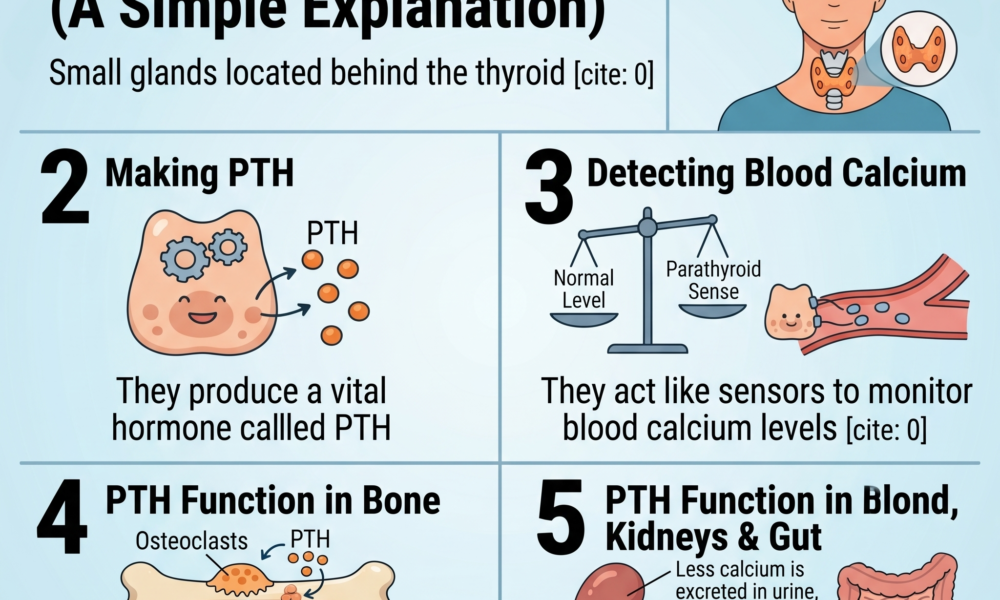
Parathyroid glands are small endocrine glands located behind the thyroid gland in the neck.
Most people have:
- Four parathyroid glands
- Each about the size of a grain of rice or pea
- Positioned behind the thyroid, although exact locations can vary
Despite their name, parathyroid glands are not the same as the thyroid gland. They have a completely different function.
What Is Their Main Job?
The primary role of the parathyroid glands is to control calcium levels in the blood.
Think of them as the body’s calcium regulators.
Calcium is essential for:
✓ Strong bones and teeth
✓ Muscle movement
✓ Nerve function
✓ Heart rhythm regulation
✓ Blood clotting
✓ Brain function
The body needs calcium levels to remain within a very narrow range. Too much or too little calcium can cause serious problems.
Parathyroid glands help maintain this balance.
How Do Parathyroid Glands Control Calcium?
Parathyroid glands produce a hormone called:
Parathyroid Hormone (PTH)
When blood calcium becomes low, the glands release PTH.
PTH increases calcium levels by acting on:
1. Bones
PTH signals bones to release stored calcium into the bloodstream.
2. Kidneys
PTH helps kidneys retain calcium instead of removing it through urine.
3. Vitamin D Activation
PTH activates vitamin D, helping the intestines absorb more calcium from food.
This coordinated system keeps calcium levels stable.
A Simple Way to Understand It
Imagine your body has a calcium thermostat.
- If calcium drops → Parathyroid glands turn calcium up
- If calcium rises → Hormone production decreases
This constant adjustment happens automatically.
What Happens If Parathyroid Glands Produce Too Much Hormone?
Overactive parathyroid glands cause:
Hyperparathyroidism
This means excess PTH is produced, raising blood calcium levels.
Symptoms may include:
- Fatigue
- Kidney stones
- Bone pain
- Weakness
- Frequent urination
- Mood changes
- Memory issues
- Digestive problems
Some patients have no symptoms and are diagnosed through blood tests.
What Happens If Parathyroid Hormone Is Too Low?
Low PTH causes:
Hypoparathyroidism
Calcium levels become too low.
Possible symptoms:
- Tingling in hands or lips
- Muscle cramps
- Muscle spasms
- Numbness
- Fatigue
- Seizures in severe cases
Low calcium may require medical treatment.
Are Parathyroid Problems Common?
Parathyroid disorders are less common than thyroid problems, but they are important because they affect multiple body systems.
Conditions include:
- Parathyroid adenoma (benign tumor)
- Hyperparathyroidism
- Hypoparathyroidism
- Rare parathyroid cancers
Why Are Parathyroid Glands Important During Thyroid Surgery?
This is an important topic in head and neck surgery.
During thyroid cancer surgery or thyroid removal, surgeons carefully identify and preserve the parathyroid glands whenever possible.
Temporary or permanent injury to these glands can affect calcium regulation after surgery.
Experienced thyroid and head & neck surgeons prioritize preserving:
- Blood supply to parathyroids
- Normal gland function
- Long-term calcium balance
How Are Parathyroid Problems Diagnosed?
Evaluation may include:
Blood Tests
To measure:
- Calcium levels
- Parathyroid hormone (PTH)
- Vitamin D
- Phosphorus
Imaging Tests
Sometimes scans help locate abnormal glands.
Examples include:
- Ultrasound
- Nuclear medicine scans
- CT scans in selected cases
Can Parathyroid Disorders Be Treated?
Yes. Treatment depends on the underlying cause.
Options may include:
- Observation and monitoring
- Calcium or vitamin supplements
- Medication
- Surgery for overactive glands
When surgery is needed, precise localization and experienced surgical management are important.
Final Thoughts
Although tiny, the parathyroid glands have a major responsibility: maintaining healthy calcium levels that support muscles, nerves, bones, and overall body function.
Problems with these glands may lead to symptoms ranging from fatigue and kidney stones to muscle spasms and bone issues. Early evaluation can help identify abnormalities before complications develop.
Understanding these small glands becomes especially important for patients undergoing thyroid surgery or being evaluated for calcium-related disorders.
About the Author
Dr. Dushyant Mandlik is a Head & Neck Cancer Surgeon with expertise in thyroid surgery, neck surgery, and comprehensive management of head and neck conditions. His focus includes precision surgery and patient-centered care for thyroid, parathyroid, and head & neck diseases.