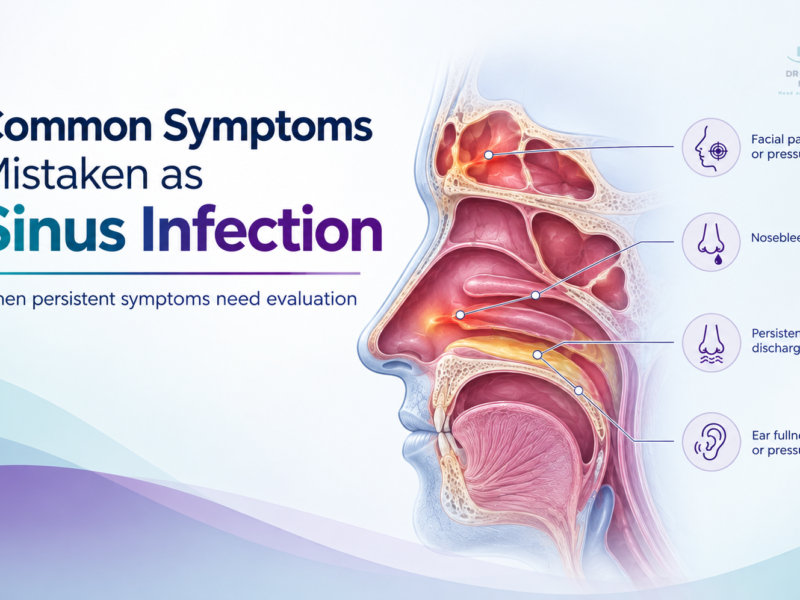
Most people think of sinus problems as something minor , a blocked nose, a cold, or seasonal allergies. It’s common to ignore symptoms like nasal congestion or facial pressure, assuming they will settle with time or medication.
And in most cases, they do.
But occasionally, these seemingly simple symptoms can be a sign of something more serious , sinus cancer.
While sinus cancer is relatively rare, early recognition and accurate diagnosis play a critical role in ensuring effective treatment and better outcomes.
Understanding Sinus Cancer
Sinus cancer refers to cancer that develops in the paranasal sinuses , the air-filled spaces located around the nose, cheeks, eyes, and forehead.
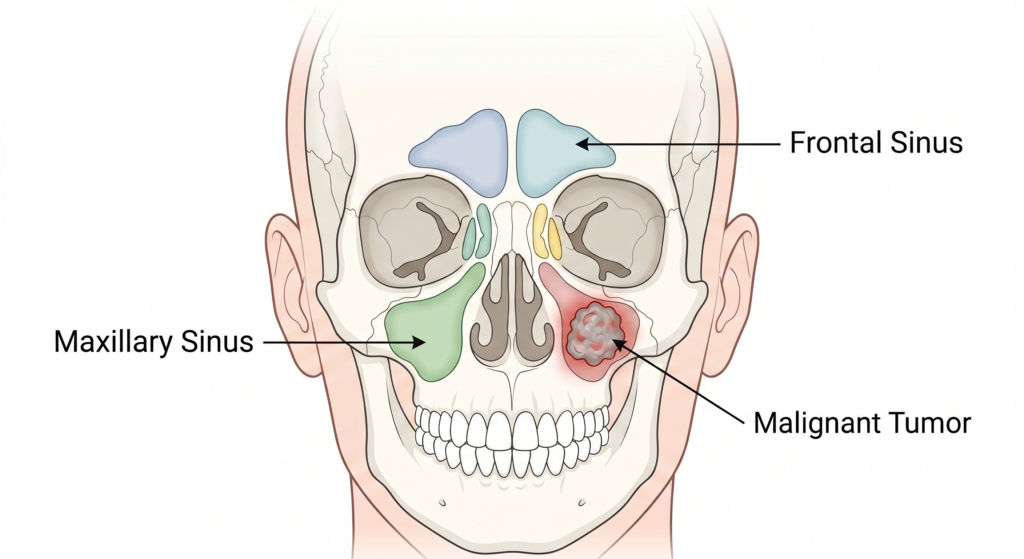
The most commonly affected areas include:
- Maxillary sinuses (cheek area)
- Ethmoid sinuses (between the eyes)
- Frontal sinuses (forehead region)
These spaces are closely surrounded by important structures such as the eyes, brain, and nerves, which makes early detection particularly important.
Why Sinus Cancer is Often Missed Early
One of the biggest challenges with sinus cancer is that its early symptoms closely resemble common sinus issues.
Patients may experience:
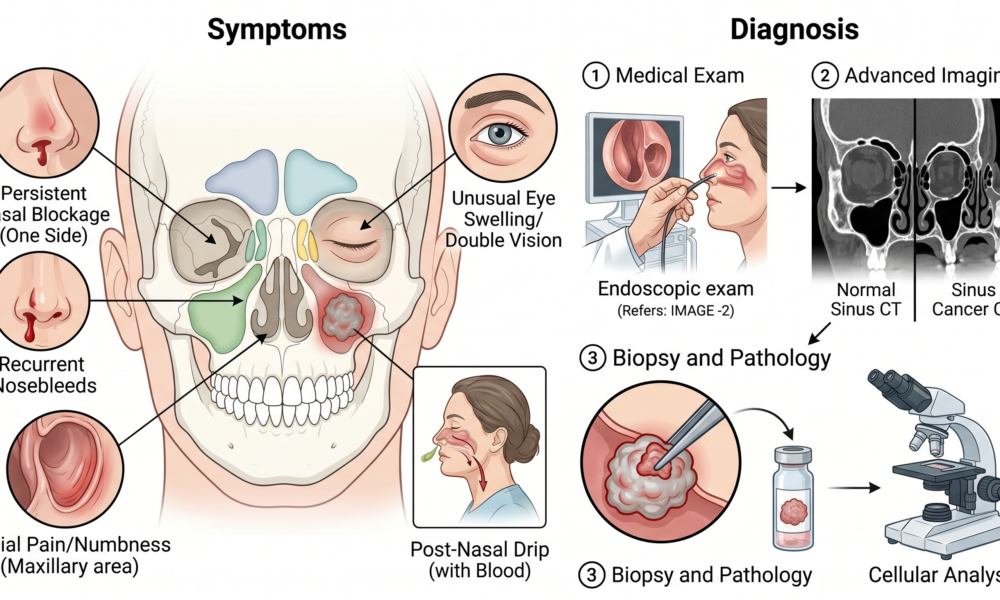
- Persistent nasal blockage (often on one side)
- Frequent sinus infections not responding to treatment
- Facial pain or swelling
- Headaches
- Reduced sense of smell
Because these symptoms are so common, many patients delay seeking specialized evaluation.
A key red flag is symptoms that persist or worsen despite treatment.
Warning Signs You Should Not Ignore
As the disease progresses, symptoms may become more noticeable:
- Nosebleeds (especially from one nostril)
- Swelling around the eyes
- Double vision or vision changes
- Loosening of teeth or upper jaw discomfort
- A visible or palpable mass in the face or nasal cavity
These signs warrant immediate medical attention.
How is Sinus Cancer Diagnosed?
Diagnosing sinus cancer requires a careful and systematic approach. It is not based on symptoms alone , but on a combination of clinical evaluation, imaging, and tissue diagnosis.
1. Clinical Examination
The first step is a detailed consultation and physical examination.
Using specialized instruments or endoscopy, the nasal cavity is examined to identify:
- Abnormal growths
- Bleeding areas
- Structural changes
This step helps determine whether further investigation is needed.
2. Nasal Endoscopy
A nasal endoscopy is a minimally invasive procedure where a thin, flexible camera is used to look inside the nasal passages and sinuses.
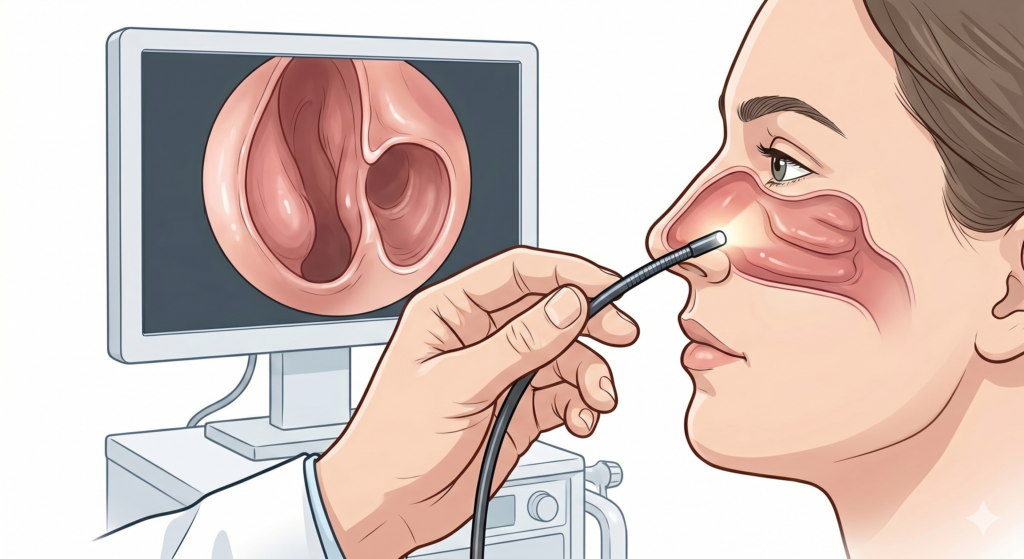
It allows us to:
- Directly visualize suspicious areas
- Assess the extent of the lesion
- Guide biopsy if required
This is often done in an outpatient setting and provides valuable real-time information.
3. Imaging: CT Scan and MRI
Imaging plays a crucial role in understanding the tumor.
- CT scan helps assess bone involvement
- MRI provides better detail of soft tissues, nerves, and nearby structures
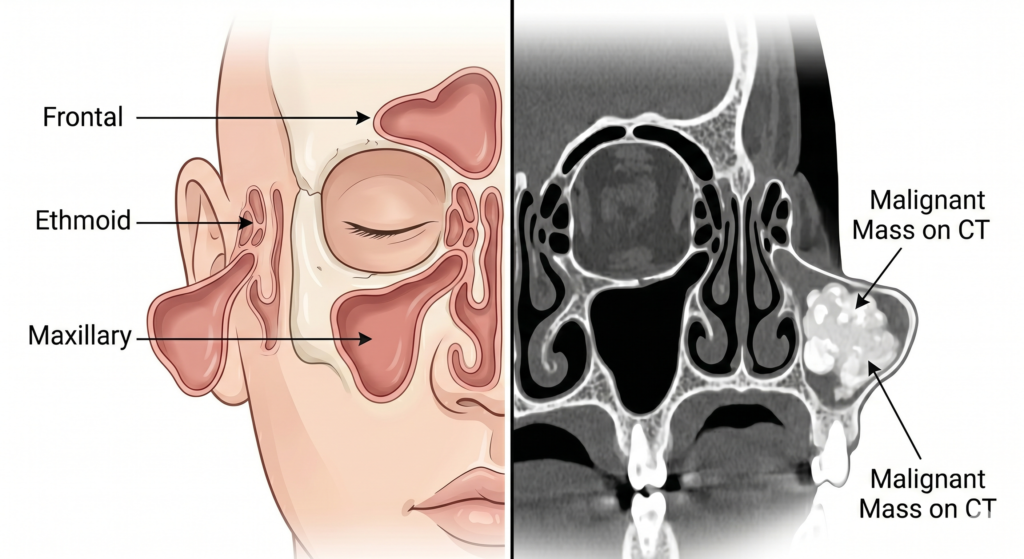
These scans help determine:
- Size and location of the tumor
- Spread to surrounding areas
- Surgical planning if needed
4. Biopsy , The Definitive Step
While imaging can strongly suggest cancer, a biopsy is essential to confirm the diagnosis.
In this procedure:
- A small tissue sample is taken from the suspicious area
- It is examined under a microscope
The biopsy tells us:
- Whether the tumor is cancerous
- The exact type of cancer
- Its biological behavior
This information is critical in planning the right treatment.
Why Early Diagnosis Matters
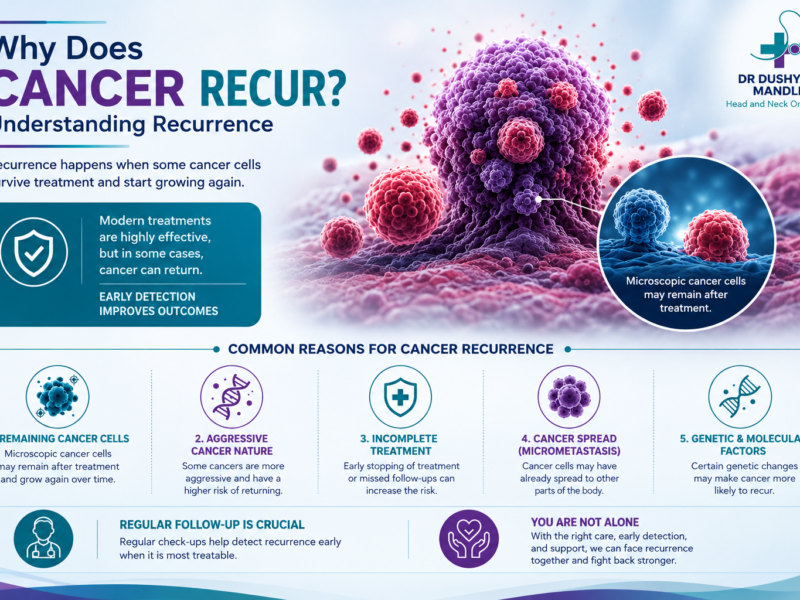
Because of the location of the sinuses, tumors can grow silently and spread to nearby structures before being detected.
Early diagnosis allows:
- Less extensive surgery
- Better preservation of vision and facial structures
- Improved treatment outcomes
Delayed diagnosis, on the other hand, often requires more complex treatment.
What Happens After Diagnosis?
Once sinus cancer is confirmed, treatment planning is personalized based on:
- Tumor type and stage
- Patient’s overall health
- Functional considerations
Treatment may involve:
- Surgery
- Radiation therapy
- Chemotherapy
- Or a combination of these
In many cases, advanced surgical techniques and reconstruction are used to restore both function and appearance.
Final Thoughts
Sinus cancer may be rare, but it is not something to overlook , especially when symptoms persist or behave differently from routine sinus problems.
If there is one message I would emphasize, it is this:
Do not ignore persistent, one-sided sinus symptoms. Early evaluation can make a life-changing difference.
As a surgeon, my goal is not only to treat cancer effectively but also to ensure that diagnosis happens at the right time, when treatment can be more precise, less invasive, and more successful.
About the Author
Dr. Dushyant Mandlik
Head & Neck Cancer Surgeon in Ahmedabad
With expertise in advanced cancer surgery, microvascular reconstruction, and precision-driven oncology, Dr. Mandlik focuses on delivering comprehensive, patient-centered care , from accurate diagnosis to complete recovery.